18 January 2012
Viewing Journal: Week of Sundance
Wasn't planning to go this year, but it turns out that my next-door neighbor (in Oxnard! not even L.A.) is in the film business, and is also the mother of the kid who played the lead role in Fido, which now that I look that film up again I see that her son was arrested last October for breaking into a Verizon store, which I guess will give us something to talk about on the 12-hour drive to Utah. (I'm flying back.) Anyway. She's giving me a free place to stay, so I'm heading out for a long weekend to see Antonio Campos' Simon Killer plus whatever else I can get into without a press badge. Should be spending a whole lot of time standing in rush lines, so I'll try to kill some of it by writing up drive-bys on my phone. Nothing this week 'til then, probably; I like to take a pre-fest breather.
The Queen of Versailles (Lauren Greenfield): 61. More than just schadenfreude—watching billionaires struggle to make payments after their source of imaginary money has disappeared simply magnifies the average American's financial self-delusion to unimaginable proportions, thereby allowing us to perceive that we're not blameless. A far more trenchant and illuminating view of the lending crisis than was a self-righteous screed like Inside Job; can't help but feel, though, that Greenfield often throws her subjects under the bus to serve her emerging thesis. No question that there's often a staggering lack of self-awareness in the Siegel household, but the degree to which Jackie and David metamorphose from nouveau-riche cartoons to recognizable human beings as their fortunes fall suggests a lot of early deck-stacking via selective editing. I'm still genuinely upset about the lizard, though.
Simon Killer (Antonio Campos): 47. Confirms Campos as a world-class filmmaker, this time with an emphasis on jarring rhythm rather than creeping stasis; multiple cuts took my breath away, especially during the generally excellent "first act" (for lack of a better designation), featuring Simon alone. Once women are introduced, however, the film makes a hugely disappointing nosedive into indie cliché, subdivision Ineffectual Masculinity As Steadily Mounting Horror Show. For a while, I thought Campos might have coincidentally made the same arresting gambit that Petzold does in Beats Being Dead, and was prepared to bemoan his unlucky timing...but no, it's just that one damn movie again, lightly sprinkled with the same flashback-ambiguity that I considered a minor weak point in Afterschool. Corbet's performance in the title role may be the sticking point for many; I was underwhelmed, but again, that's largely because I've seen this character way too many times now. Apart from the student-abroad aspect, there's just nothing distinctive here. It very much feels, I'm immensely sorry to say, like a typical "dark" Sundance movie. Chalk it up to sophomore slump; I'm still excited for the next one.
Celeste & Jesse Forever (Lee Toland Krieger): W/O. Painfully unfunny sitcom-style portrait of a dysfunctional breakup, with only one joke/observation: they can't stop being best friends long enough to get over each other. Having endured that precise situation (for about a year), I can confidently say this film gets nothing about it right. Samberg in particular seems utterly lost trying to be ordinary.
Compliance (Craig Zobel): 53. Amazingly, disturbingly persuasive on a moment-to-moment basis—I'd read extensively about the real-life event(s), hence knew everything that was coming, but seeing it play out in something not too far removed from real time still packed a Milgramesque wallop. Even before the insanity begins, Zobel excels at capturing the mundane details of e.g. fast-food management, abetted (if that's le mot juste—some clearly think so) by a phenomenal cast of pitch-perfect barely-knowns, especially Ann Dowd as the heartbreakingly gullible store manager. The decision to eventually make "Officer Daniels" more than a voice on the phone, however, was horribly misguided, and suggests, along with the damp squib of an ending, that Zobel never really worked out what the point of dramatizing this story was. I understand the impulse to avoid the appearance of a "twist" (which was Zobel's response when questioned after the screening), but there were plenty of ways to achieve that without compromising the restrictive POV; giving the audience more information than the ChickWich employees undermines any ostensible purpose this movie could claim to have. Score is problematic, too, goosing the viewer in ways that are entirely counterproductive (and strengthening the charge of the very pissed-off woman at the back of the Library who kept shouting "Violence against women is not entertainment!"). Just incredibly muddled, really. I feel roughly equal parts admiration and repulsion. But seriously: Ann Dowd. She wipes the mat with Margo Martindale, and I don't say that lightly.
For Ellen (So Yong Kim): 36. Hammers the same doleful note for an hour and a half, to truly numbing effect. Imagine a more depressive version of Clean, minus the drug abuse (just general irresponsibility), with Paul Dano at his most recessive in lieu of Maggie Cheung and a kid who's so determinedly anti-precocious that her blank monosyllables come across just as phony as "The human head weighs eight pounds!" or whatever. Lengthy interlude with Jon Heder as Dano's dork of an attorney had me hoping the film might just abandon its child-custody plot and go somewhere wholly unexpected, but false alarm. This particular strain of low-key indie is really starting to calcify; even the "spontaneous" ending feels pre-programmed, as formulaic in its way as having everyone onscreen applaud on our behalf as boy and girl finally kiss.
Keep the Lights On (Ira Sachs): 49. Writing about Weekend, I expressed my desire to see a gay romance in which homosexuality was taken for granted; now I see that I should have added "and neither one is a drug addict." Sachs does a fine job of fictionalizing what by all accounts is an intensely autobiographical story—nothing like giving your alter ego a different national origin to create some productive distance—but he skimps badly on the dude who broke his heart, allowing him to remain a beautiful cipher with a crack pipe (and confirming yet again that all addicts are tedious in exactly the same way). It's significant, and dispiriting, that we learn a great deal about Erik's filmmaking career—which implausibly has one of his docs opening commercially at the Quad within weeks of its Rotterdam premiere; weird that Sachs would muff a detail like that—but nothing whatsoever about Paul's apparently high-pressure job...or anything about Paul, really, apart from his habit and his cocksmanship. Given that the movie covers nine years of their relationship, that's remarkably ungenerous, even allowing for the fact that we're seeing everything through Erik's eyes. Appealing performance by Thure Lindhardt, who's like a cuddlier Rutger Hauer, and lovely use of natural light streaming through windows are the main attractions here.
Beasts of the Southern Wild (Benh Zeitlin): 62. As singular as advertised, fashioning a mythological community out of flotsam and jetsam both physical and cultural. Because I walked in cold, the first 20-25 minutes were thrillingly disorienting; the thought seemed bizarre when it occurred to me, but reading reviews I see I'm not the only one who felt he was watching a more fundamentally faithful adaptation of Where the Wild Things Are than was Jonze's. Consequently, the moment when it became clear that The Bathtub = The Ninth Ward was a bit of a letdown. The more the movie veered into blatant allegory, the more I found myself retreating to distant admiration, and later episodes—the escape from the government refugee camp; the floating brothel—feel comparatively underimagined, mere pit stops en route to that stunning final shot. But visions this unique and arresting don't come along nearly often enough for me to get too bogged down in dramaturgical nitpicking. Beasts isn't wholly successful, but I can't imagine there's a film here this year that's so unmistakably mandatory viewing.
Young & Wild (Marialy Rivas): 62. Marveled throughout at the visually inventive and scarily accurate integration of social media, only learning afterward that the film was in fact adapted from an anonymously-written Chilean blog. Its rallying cry for the libido and distaste for fundamentalism skew too simplistic even for me, and narrative aspects are predictably weak (based on real life or not, the beatific cancer victim only exists to provide gravity for the ending), but lead actress Alicia Luz Rodríguez infuses Daniela with a watchful stillness that beautifully complements Rivas' hypertextual portrait of the adolescent female mind at work. As far as the latter is concerned, it's possible that I'll look back in a few years and find that I was overly impressed by the attention to detail—a tiny italicized "Sailor Moon is writing" during IM chat, as we stare at the intended recipient staring at her computer—but movies have so far whiffed that aspect of modern life so badly that right now it's bracing just to see it done right. The com-box on Daniela's blog alone is potentially worth the price of admission.
Corpo celeste (Alice Rohrwacher): 41. Really, NYFF? (Makes sense for recent Fortnight.) A little girl who gets her first period on the day she's to be confirmed? Visual correlation between a crucifix that falls off a truck into the sea and a bunch of newborn kittens tossed into a reservoir before our sensitive protag's horrified eyes? Doggedly sticking to a single character's POV except for a brief stretch when that becomes inconvenient? Béla Tarr blowing-trash follow-shot? (I asked Rohrwacher politely about this in the Q&A, leaning hard on the word "homage"; she claims she only saw Sátántangó afterwards.) The freakin' symbolic mid-film haircut?!? Well-intentioned and not completely without merit—the lead actress nicely underplays Marta's burgeoning sense of self, and the bit where she fondles Jesus on the cross in a way that could be reverential, sexual or both is a keeper—but this is ND/NF material all the way, mildly promising at best.
V/H/S (Adam Wingard/David Bruckner/Ti West/Glenn McQuaid/Joe Swanberg/Radio Silence): 52. The usual mixed bag, exacerbated in this case by the fact that three of the six filmmakers came up with the same basic shocking twist. By far the best of the lot is Bruckner's "Amateur Night," which tosses one deeply unnerving element into a cacophony of frathouse badinage; it's as if, say, those little girls from The Shining suddenly turned up in the middle of Swingers, and were somehow perceived as perfectly normal. (Great ending, too, especially if it was inspired by the viral video I think it was.) Swanberg's segment boasts a strong gimmick (Skype) and an interesting dynamic between its two leads, but suffers from its ultimate similarity to West's segment, in which Swanberg stars. (Was there no conversation about this?) McQuaid squanders the film's sole idea that's actually intrinsic to the VHS format; Radio Silence look as if they could construct one hell of a haunted-house carnival ride; Wingard's dopey wraparound piece has no purpose save to impose a structure where none is needed. Apart from the last, though, every short is at least a little creepy, so I can't imagine horror aficionados being too disappointed.
Pursuit of Loneliness (Laurence Thrush): 71. Off-putting title doesn't do justice to this gorgeously shot black-and-white reverie, which somehow embodies the paradox of a scripted Wiseman doc. (Specifically, Hospital, which Thrush confirmed as a major influence when I asked him during the Q&A.) It's an unsparing portrait of what it means to die alone, yet it's utterly devoid of pathos, focusing almost exclusively on the banal routines of various caregivers and functionaries—each of whom comes across as a warm, caring, perfectly lovely individual even as she (it's mostly women) maintains the necessary diffidence required for a job that confronts mortality on a daily basis. If not for the consistently stunning compositions, you could often swear you were watching a documentary, so skilled are the film's non-actors at recreating aspects of their profession; there's a unstudied nonchalance to every interaction that's far more plangent—to me, at least—than conventional grieving would have been. Not entirely sure about the occasional flashbacks, which do tug a little more traditionally at the heartstrings (though I loved the Jehovah's Witness visit and its strategic use of the door's peephole, which pays off big later on), and the coda, which shifts to another patient, is a tad ad infinitum for my taste. But this was still the most accomplished, and by far the most unexpectedly terrific (I actively tried to dump my ticket, fearing a dreary downer) film that I caught at this year's fest, and Thrush, whose previous feature (Left Handed) I haven't seen, could potentially be a major talent. A nice note to head home on.

12 January 2012
Viewing Journal: Week of 9-15 Jan

Pariah (2011, Dee Rees): W/O
So tonight we're gonna party like it's 1995. If Weekend feels like at least a bit of a step forward for mainstream queer cinema, this well-meaning inspirational clunkfest represents two steps back; I knew it was hopeless almost immediately, when a minute-long sequence of the protagonist staring pensively out a bus window was accompanied by some horrible acoustic folk-blues number with the lyrical refrain "Got to keep doin' my thing / I got to keep doin' my thing." Do you now. Performances all seem solid enough (though the bratty younger sister's a bit much), but it's tough to create an indelible character when every scene has exactly one unmistakable, dogmatic function, leaving zero room for grace notes or sidelong observations. And here's precisely the sort of boorish, in-your-face bigotry that Weekend so deftly avoided; I'm sure there really are still assholes out there accosting slightly butch women with hateful remarks about how they're too ugly to attract a man, but they don't make the most effective dramatic antagonists. Why am I about to leave for Sundance again...?
/Modern Romance/ (1981, Albert Brooks): 90
Switch the Quaaludes to soju and have Robert pursue a different-but-similar woman in the second half and this could be a Hong Sang-soo picture, though its depiction of masculine anxiety is much more overtly comedic. It also uncannily prefigures the Onion's classic story "Romantic-Comedy Behavior Gets Real-Life Man Arrested," except that Brooks understands how sheer relentlessness can in fact create a folie à deux that ensnares otherwise sensible women; the movie's greatest triumph is the sheer horror inspired by what would constitute a traditional, clichéd happy ending in a Hollywood romcom. (I do wish he'd omitted the closing title crawl, which is funny enough but detracts from the perverse power of that final "romantic" crane shot.) Significant (vis-à-vis Hong again) that Brooks makes his alter ego an editor rather than a writer or director—not only are the post-production hijinks endlessly hilarious, they reflect Robert's ability to "cut" obvious but discomfiting truths from his mental narrative of the relationship, or to imagine that everything can somehow be "saved" by an inconsequential gesture (new footsteps, stuffed giraffe). That Robert recognizes professionally what he can't grasp in his personal life is just one small aspect of this film's unyieldingly painful honesty, and the real glory is that most of the time you're laughing too hard to even process that bleak worldview. Shame that Brooks doesn't really know what to do with the camera, but at least his primitivism errs on the side of long takes, stasis and "dead air," which is wholly appropriate. Utterly tragic, full stop, that the other Brooks, James L., has never acted since. I have never not lost it when he mouths "little weasels."
/The Searchers/ (1956, John Ford): 66
Time to bite the bullet and admit—as much to myself as to you fine people—that I just don't love The Greatest Western. Easiest way to rationalize this heresy is to pick a fight with the ending, which has always felt baldly contrived; I've read heroic interpretations of Ethan's sudden decision to cradle Debbie in his arms, but never a sensible word regarding Debbie's equally sudden (and patently ludicrous) about-face when Martin comes for her. Truthfully, though, the film's disregard for the harrowing reality of an assimilated captive's ordeal is only one of many speedbumps. Martin and Laurie's frustrated romance, for example, while often entertaining for its own sake, doesn't really work as a counterpoint to Ethan's quest, even though Martin being part-Injun would seem to suggest numerous fruitful avenues. And a number of light-hearted interludes are just embarrassing, viz. Martin's inadvertent purchase of "Look" or anything involving the simpleminded Mose. There's more than enough greatness—in Wayne's unforgiving performance; in Ford's canny use of interiors and exteriors (despite my grousing above, it is significant that Debbie acquiesces inside a tepee); in touches as magnificent as the death of Lucy's fiancé Brad, revealed solely by implication via Max Steiner's score—to compensate for these lapses, but I can no longer bring myself to pretend that they don't exist, or that they don't hamstring the movie to a sizable degree. Even if that perfect final shot still makes me want to try.
/The Long Kiss Goodnight/ (1996, Renny Harlin): 68
Kind of amazing to discover that this film's utterly disposable, who-even-cares? villain plot conforms precisely to the paranoid fantasies of the 9/11 Truth movement, even throwing in a quick reference to the '93 World Trade Center bombing (which is unrelated to the actual diabolical Muslim-fall-guy scheme). Ironic, too, since even Big Dumb Hollywood Action Movies are rarely so giddily unconcerned with real-world plausibility. Harlin's relish for fervid excess meshes beautifully with Shane Black's then-developing knack for the pungent one-liner; Samuel L. Jackson commenting on his own dialogue ("I would have been here sooner, but I was thinkin' up that ham on rye line") is just the verbal equivalent of Geena Davis taking out a squadron of hit men using a gun still lodged in somebody else's pocket. (Speaking of which, that's twice Black has used the gun-hidden-next-to-my-dick bit. Arguably once too many.) Enormous fun, but more so when the action is rising than when it starts falling—partly because the premise suggests a piercing melodramatic dilemma in which this goofy film is almost wholly uninterested (Samantha's husband just vanishes until the coda, and her daughter is Generic Moppet #406), but mostly because Davis can dance the White Swan but isn't terribly convincing as the Black Swan. A short frosted-blonde haircut and heavy eyeliner only do so much. (Sad observation: She turned 40 the year this film came out, and has not played a leading role in a feature film since.) If for no other reason, I'll always treasure The Long Kiss Goodnight for revealing that I'm not the only one who always heard that line as "I'm not talkin' 'bout the linen." Faulty meter, England Dan and/or John Ford Coley.
Belle Epine (2010, Rebecca Zlotowski): W/O
[Pedigree: Cannes '10 Critics' Week; ND/NF '11]
Léa Seydoux's lack of affect served her well as an icy assassin in Ghost Protocol, but I've had trouble with her in other contexts; anchoring a delicate character study seems well beyond her sullen, pouty means at present. Which is particularly problematic since Zlotowski is admirably determined to avoid emotional signposting, opening the film in medias res with the protagonist's acting out (actually with the consequences for same, so one step further removed) and only gradually revealing the fairly banal reasons for it. Another case of just-never-grabbed-me...and it's only 80 minutes long, so I watched fully half of it before throwing in the towel. Note to self, though: This director is heavily into casual female nudity.
/Menace II Society/ (1993, The Hughes Brothers): 44
Never did understand the hoopla surrounding these guys—Menace II Society premiered in Director's Fortnight, if you've forgotten, while Dead Presidents was in NYFF—and I gotta say I feel like I've been entirely vindicated by posterity. Extensive use of retrospective voiceover here deliberately recalls GoodFellas, but Henry Hill didn't spend the entire movie being prodded to better himself; despite the absence of a didactic role model à la Laurence Fishburne (though Charles S. Dutton turns up briefly to serve a similar function), this is arguably even preachier than Boyz n the Hood, continually offering Caine escape routes from The Life even as it sets up the dominoes that'll take him out. In theory, I can get behind the tale of a sensitive young kid whose potentially bright future gets destroyed by the hopeless corner of the world into which he was born, but not when that's constantly being highlighted and underlined, to the exclusion of not just a gripping narrative but any real sociological interest or even just memorable texture. Everything's subordinate to the message/moral, with which no rational viewer could possibly disagree, so there's nothing to do except await the inevitable. (That Jada Pinkett Notyetsmith's innocent kid doesn't wind up getting killed in the crossfire afforded me one less opportunity to roll my eyes, it's true, but a good movie wouldn't appear to be setting that moment up in the first place.) Alternately bland and preposterous (they don't even think to wipe the Korean liquor store of fingerprints?), with only the occasional fluid tracking shot and some decent performances to recommend it. The Book of Eli seems roughly where they've always belonged.
/Bambi/ (1942, David D. Hand): 46
I'm as surprised as you probably are (although the film's Wikipedia entry claims that contemporaneous reviews were mixed to negative). No question that it's beautiful, but it doubles down on all the most cloying, simpering aspects of the early Disney house style, from aw-shucks vocal characterizations to that heavenly-choir effect in every damn song. People always talk about being traumatized by the death of Bambi's mother, but nobody ever mentions (or seems to remember) that the film immediately fades to black and then fades up a year later on a bunch of birds twittering gaily about how swell springtime is (RT @robinredbreast oh yeh i'm horny as hell LOL); the loss is no sooner felt than completely forgotten. And that moment occurs about 40 minutes into a movie that's only 70 minutes long, preceded by nonstop bashful-wobbly adorableness and followed by a delusional primer on romance that no doubt warped an entire generation. Only the climactic fire suggests a film intended to elicit a more vital reaction than "Aww!"—it's significant that "man" (as opposed to just "hunters") plays the unseen heavy, depicted as the spoiler of everything that's good...though of course even this pointed stance ignores the inherent cruelty of nature itself, as a deer is far more likely to be killed by a cougar or jaguar than by a bullet or a man-made inferno. You may feel that I'm being unduly critical of a movie made for children, but I'll be enormously surprised if I feel this way about Dumbo or Pinocchio, both of which find room for personality, humor, and complicated (if not complex) emotions en route to their preordained happy endings. Bambi is aptly named; it's the Barbie of talking-animal cartoons.
05 January 2012
Viewing Journal: Week of 2-8 Jan

Here's my standard top-of-the-month reminder that if you read these entries on a regular basis, find them in any way valuable, want to ensure that I don't get discouraged and give up, you should throw me a few bucks (link's at the top of the main page)—whatever you think a month's worth of near-daily capsules is worth to you. The amount is unimportant. (I suggested as little as $2; $5-10 is more common.) Just let me know you give a damn.
/Black Orpheus/ (1959, Marcel Camus): 51
Startled to discover that this was adapted from a play, because it's much more documentary than narrative—a swirling, colorful portrait of Rio de Janeiro during Carnaval, onto which a skeletal reimagining of the Orpheus-Eurydice myth has been grafted. Seen from today's perspective, it skews pretty tourist-y, as if Camus' primary goal was simply to share this vibrant culture with an international audience. Look at 'em dance! And the two lead actors seem to have been chosen strictly for their hot-cha-cha quotient, which makes their literally undying love seem like something out of a Corman beach movie. Still, it's not as if being a tourist is all bad, and Black Orpheus does have energy to spare; there's a captivating unruliness on the fringes, some of which extends to the supporting cast (particularly Léa Garcia, as Eurydice's cousin Serafina, who seems to be auditioning for Bridesmaids 50 years early). Maybe if Cocteau's Orpheus didn't exist, I wouldn't feel so disappointed by the skimpiness of this film's "underworld"—the only moment that's remotely arresting (but non-festive) is Orfeu's visit to the Missing Persons office, where the janitor insists that there's nothing to be found but endless paperwork. And even that mild dig at bureaucracy seems to come out of nowhere and then go right back where it came from. I'm no fan of Hiroshima, Mon Amour (as of my last look, which was a while ago), but that would surely have been a more deserving Palme d'Or winner. To say nothing of The Four Hundred Blows or (my oddball personal choice from that year's Competition lineup) Compulsion.
City of Life and Death (2009, Lu Chuan): 40
Worried at first that this would just be a grueling never-forget testament to the Rape of Nanking, with no real purpose other than to remind us that these atrocities happened. Thankfully, Lu isn't hell-bent on shoving our faces into the horror...but that's mostly because he's working so hard to valorize the Chinese. Final straw for me was when the sadistic Ida orders Rabe's secretary to be executed by firing squad, then turns his back on the scene in a way that implies he's secretly sorrowful after having witnessed the man's dignity and courage. But even the filmmaking itself frequently slips into sub-Spielberg mawkishness. Is it not moving enough that women volunteer to "comfort" Japanese soldiers so that others can eat? Must we have solemn strings and a montage of hands being raised skyward in slow motion as dust motes fall? Ostensibly, the choice of an inexperienced Japanese soldier as the closest thing to an identification figure complicates matters, but he's so unfailingly noble and sensitive—never tempted to take part in the abuse, yearning to marry the (Japanese) hooker who deflowers him—that he's essentially an honorary Chinaman. (I believe that is the preferred nomenclature, Walter. Shut the fuck up, Donnie, you're out of your element.) And I am the only one who finds the ending kind of grotesque? Not in terms of who dies (which is just the culmination of my complaint above), but regarding the instantaneous elation of the two survivors, who run giggling into the future. Even the last freaking Harry Potter movie managed more ambivalence than that.
/Miss Bala/ (2011, Gerardo Naranjo): 79
Previously addressed at Cannes, where I somewhat exaggerated, I see now, its potential commercial appeal—Naranjo's expertly choreographed sequence-shot "action" setpieces do thrill, but in the rarefied manner of e.g. Jancsó's The Red and the White, not à la M. Mann or even De Palma. Sticking to my guns on the feminist reading, though, which reaches its apotheosis at the moment when Laura's shoved onto the pageant stage (minutes after surviving a bloody shootout) and is asked by the unctuous host which she desires more: wealth or fame? Some have complained that she lacks agency, but there's an important distinction between being powerless and being a victim; Naranjo repeatedly provides her with choices that aren't really choices at all, deftly skirting didacticism while laying bare the self-defeating trap society lays for young women. "Does this building have another exit?" she asks desperately early on, and we root for her to escape, which she does...to the nearest boutique, trying on expensive dresses with the wad of cash Lino gave her. Likewise, Lino never technically rapes her, though he easily could—instead, he sets her free on the beach, telling her she'll reach civilization in a couple hours' walk, but also insisting that she'll have to abandon her father and younger brother (whose college education, the pageant host breathlessly informs us, she hopes to fund with her winnings). Any wonder that she turns around and gets in the car to take it doggy-style? Even the final shot is very deliberately open-ended, not for ambiguity's sake but by way of suggesting that subsequent "choices," too, will be hers to make. Hard for me to see how anybody could think this infinitely sorrowful movie is about the drug war after seeing Laura stare at her crown in the mirror as she prepares to bed the General; its meaningless closing title card (and Naranjo and Sigman's corresponding remarks in interviews) must be some kind of sop to a funding source or government agency.
/Pleasantville/ (1998, Gary Ross): 45
A leading contender for the title of Most Thematically Incoherent Movie Ever Made—it's abundantly clear that Ross thought up the high concept first ("modern teens trapped in Leave It to Beaver") and then struggled to construct a meaningful allegory around it, in the hope that it might carry a little more weight than, say, The Brady Bunch Movie. Trouble is, he seems to think that '50s TV sitcoms were an accurate reflection of how people behaved back then, or at least that there's some version of real-world America, past or present, that the passionless, terminally square town of Pleasantville might plausibly represent. Tobey Maguire's David, disenchanted with his broken home and in thrall to an idealized golden age, ought to be the prototype for Midnight in Paris' Gil, yet never for a moment seems to relish his incarnation as Bud—the story isn't about his personal transformation but about how he and his sister (Witherspoon gets one delicious moment, spying Paul Walker as the school dreamboat and asking, with a predatory twang, "Does he like me?") liberate everybody else from the shackles of...what, exactly? Ancient sitcom tropes? Are we seriously meant to conflate the anti-resonant idea of people with no concept of sex, art, failure or (for fuck's sake) rain with the civil rights movement (NO COLOREDS)? I just have zero idea what Ross thinks he's saying here, and I really don't think he does either, deep down, apart from some vague notion of "repression" vs. "freedom." This somehow squeaked into the Skandies top 20 that year (hence the second look); hopefully the voters responsible are the folks who've been weeded out since then.
\Nostalgia for the Light\ (2010, Patricio Guzmán): 54
Bailed on this at Toronto 2010, mostly because I was disappointed that the initial rush of gorgeous imagery accompanied by solemn voiceover was supplanted by conventional talking-head interviews. But I see now why that was necessary: Had Guzmán not encouraged the astronomers to indulge his specious equivalence, the movie would have risked coming across as implicitly hostile to science, which was clearly not his intention. At the risk of seeming callous, I gotta say I'm not terribly...well, no, I am sympathetic toward the relatives (mostly women) who've dedicated their lives to finding the remains of the disappeared, but that doesn't mean I don't think them misguided, or see a (quasi-literal) world of difference between their quest and that of the folks manning the Atacama telescopes. Gazing into the unimaginably distant past yields answers to fundamental questions about why we're here (and the likelihood that we're alone); excavating the recent past in this particular way is really just personal catharsis and ritual, as finding the bodies tells the forlorn nothing they didn't already know (except for essentially meaningless details like "he was shot twice in the head"). Seeking information about the origin of the universe and seeking closure about the death of a loved one are not the same process—not even poetically or metaphorically speaking. They're antonymical. That the film gets an above-average rating, even though I reject its entire thesis, is a testament to how beautifully it's constructed in every way save for the philosophical.
/Au revoir les enfants/ (1987, Louis Malle): 57
Respectable in every way, which is kind of the problem. Perhaps because of his lingering guilty conscience, Malle inadvertently makes his alter ego far more interesting than Bonnet/Kippelstein, who's presented as a simple martyr: hyper-intelligent, musically gifted, and utterly neurosis-free despite his circumstances. Apart from being secretly Jewish, he doesn't do a damn thing for the entire movie. (And if the real kid was dumb enough to light candles and don a yarmulke and talk Hebrew to Yahweh in the middle of the boys' dormitory at night, he was gonna get caught eventually regardless of where little Louis glanced.) There's little sense of these kids as individuals with lives that transcend the Occupation; everything builds inexorably toward the moment of inadvertent betrayal, which is nicely understated in itself but not really worthy of constructing an entire movie around—at least not if you're gonna end on it. Probably didn't help that I happened to rewatch if.... not long beforehand, as that film strikes a better balance between the iconic and the prosaic (and has a riveting presence in Malcolm McDowell). Mostly, though, Au revoir just lacks...juice, for lack of a better word. Its most noteworthy characteristics are politeness and restraint, making it an ideal foreign-language Oscar nominee (though it somehow lost the actual prize that year to the even less vital Babette's Feast). My guess is that Malle was just too close to this material—too determined to be truthful to serve the arguably more noble cause of dramatic truth. He made an impressive, tasteful monument of a movie.
The Adventures of Tintin (2011, Steven Spielberg): 49
Maybe I'm getting too old for this shit. Then again, maybe Spielberg has forgotten how to modulate high-octane action so that it breathes a little. Or, most likely, he's chosen to adapt something that works fine on the page (like most Americans, I've never read any of the "albums," as they're apparently called for some reason) but inevitably, given dogged faithfulness to the source, comes across as threadbare onscreen, thereby necessitating a constant swirl of activity as camouflage. With all due respect to Hergé—I'm perfectly willing to believe his work has value I'm not seeing here—it's sometimes hard to tell the difference between Tintin and, say, Bazooka Joe; his habit of holding expository conversations with himself (TOTALLY INVENTED EXAMPLE BECAUSE I CAN'T REMEMBER THE ACTUAL DIALOGUE, BUT TRUST ME CLOSE ENOUGH: "The one-legged orthopedist said as he was dying that the key to a woman's heart can be found at the bottom of Lake Crankshaft. What could he have meant by that, Snowy?") was a little charming at first but got exasperating in a hurry. There's just nothing to this save for a juvenile-adventure plot that's no stronger (or weaker) than the ones I used to read in Hardy Boys novels* (probably the closest American-prose equivalent), so you have to really groove on constant frenetic movement for its own sake—as if Raiders of the Lost Ark went from the opening throw-me-the-idol-I-throw-you-the-rope bit straight into the search for Marion among the baskets and then straight into the truck chase and then that was the entire movie. Exhausting. At least they're getting closer with the mo-cap—I wasn't able to readily imagine every character as the scariest element of a doll-based horror film.
* I'm being kind; in many respects it is weaker. Like, Tintin spots the Unicorn model at some street fair, decides on impulse to buy it, and instantly not one but two other interested parties show up seeking it. Where were both of them just five minutes earlier, when either could have snatched it right up with no trouble? It's not as if it had just been recovered from the ocean floor or something. Might seem a petty complaint given that it's a kid's story, but even pre-adolescents can have their intelligence insulted.
31 December 2011
Viewing Journal: Week of 26-31 December

/Starship Troopers/ (1997, Paul Verhoeven): 65
MEDIC!!!! First half still brilliant, pushing po-faced satire to deliriously giddy heights; second half still comparatively tedious, with way too much mindless shoot-em-up. That the video-game aspect also has a satirical purpose doesn't make it any less enervating—if you've seen one giant CGI pincer-insect splattered into dozens of bright-orange pieces, you've seen 'em all, and here you almost literally will see 'em all. But it's also, I think, that the bugs work far better as a metaphor for the dehumanized enemy when you're seeing them only in brief glimpses via propaganda newsreels, rather than as an actual rampaging horde with no apparent culture or even tools. (It's not clear to me how they're managing to fling asteroids at Earth, since they seem to have the technological prowess of army ants.) You may find that overly literal, and maybe it is, but the movie is just so much richer and more pointed before the war proper breaks out, when Verhoeven simply plays Heinlein's jingoism straight and lets deliberately inappropriate casting and the thinking (left-leaning) viewer's natural revulsion do most of the work. Still not sure what to make of the gender politics, though (especially given that it's all invented; there are no female soldiers in the novel)—on the one hand, you have the co-ed shower and Carmen's decision to end her relationship with Rico in favor of career advancement, but on the other you have Dizzy choking out "At least...I got...to have you" as she dies, which is so pathetically retrograde that it has to be an intentional punchline. I for one would like to know more.
\The Autobiography of Nicolae Ceauşescu\ (2010, Andrei Ujică): 38
Essentially a three-hour avant-garde work organized around a structuring absence, which works fine for me in theory but again (I bailed at Toronto 2010) proves utterly stultifying in practice. Apparently others actually enjoy watching endless footage of Ceauşescu speaking for the public record, with all the mighty passion and charisma that state functionaries commonly exude, and/or never tire of looking past the margins of the frame to consider the deprivation and abuses we're not being shown. After about half an hour, though, isn't the point pretty firmly made? Can anyone make a solid case for why the film needed to be three hours long, but would suffer from being, say, eight hours long (assuming there's that much available footage)? Perhaps the most damning thing I can note is that I literally did not remember a single moment as I rewatched the first 40 minutes—that's how profoundly uninteresting political speeches and photo-ops almost invariably are. (Admittedly there are a few memorable interludes later on, notably the volleyball game and that insane stadium placard tribute in North Korea.) It's as if somebody were to make an epic documentary called Mississippi, 1964, entirely composed of mundane archival footage of white folks having picnics or watering their lawns or whatever, with not a single image of or even verbal reference to African-Americans for the entire three hours. Maybe you could appreciate the rhetorical force of the concept, but do you actually want to sit through it? I dunno, maybe some of you do.
/Nothing Sacred/ (1937, William A. Wellman): 77
Lacks the passionate wallop of the truly great screwballs, which have an undercurrent of genuine pain beneath the fast-talking breeziness. It does however bring the funny and the biting, playing for comedy more or less the same idea that Billy Wilder would make grotesque a decade and a half later in Ace in the Hole. Hecht's witty script speaks for itself, but Wellman, pace his reputation as something of a journeyman hack, contributes a beguiling (if somewhat mystifying) formal playfulness, repeatedly placing obstacles between his actors and the camera. Are we being chided for voyeurism, in keeping with the film's patent disgust at the public craning its collective neck to see Hazel bravely dying? I'm not sure there's a shot from the '30s more perverse than the one in which March and Lombard have a conversation with their heads entirely obscured by an enormous tree branch, or a first kiss less fetishized than Wally and Hazel's, witnessed only via their feet sticking out of a dockside crate. (The camera movement that dollies around the crate to view them lying together in shadow though the slats is aces as well.) Lombard was better playing less ingenuous types, but makes the utmost of her sock-in-the-jaw moment and her curt nods at the Eastern European doctors; March's slightly seedy mien puts an edge on Wally's sacrificial devotion. (Hecht's smartest move was to give him not even the slightest pang upon discovering Hazel's been shamming—a beat you'd think even the old-time moguls would've demanded.) Most of all, I'm still happy that there's a film from 1937 that includes the line "Oliver Stone is worse than radium poisoning!" Uncanny.
Rise of the Planet of the Apes (2011, Rupert Wyatt): W/O
Um, I don't get it. This just seemed like standard-issue mediocre Hollywood blockbuster franchise reboot stuff. Right? Isn't it? Granted, I didn't make it to "Why cookie Rocket?" or indeed much of Serkis' performance, so I imagine there's something to admire further on. But after thrilling to Cruise actually scaling the Burj Khalifa, these blatantly insubstantial CGI apes leaping weightlessly around the frame just seemed tiresome—and retrograde, really. (I was equally bored by Jurassic Park, and that was almost 20 years ago now.) Also, with all due respect to Mr. Serkis, isn't putting him opposite a slumming James Franco setting the bar for emotional expressiveness kinda low?
/Mission: Impossible—Ghost Protocol/ (2011, Brad Bird): 69
Up nine points, from B- to a solid B. Third act seemed less of a letdown, for one thing—there's real Birdlike ingenuity in the parking-garage showdown (which of all the setpieces most resembles something you'd see in a Pixar movie, cf. the climaxes of both Toy Story 2 and Monsters, Inc.). More than that, though, I found myself unaccountably moved by the denouement, which had actively irritated me the first time to the point where it kinda soured me on the entire film. Theo "I can't be bothered anymore unless prodded" Panayides suggested a starteurist reading in which Cruise, repeatedly foiled by technological failures, ultimately "must go in as himself, leading through a process of emotional unmasking to the glimpse of human contact in the coda—the [SPOILER], briefly glimpsed from a distance—all the more affecting for being so minuscule (it's like Tom Cruise is saying 'This is the best I can do.')." Watching the final scene again with that last parenthetical in mind—and having also just revisited the first M:I, with its utter absence of any sexual tension between Cruise and Béart despite the whole plot being predicated on same—I suddenly got teary. Even the shaggier, I-ain't-old-yet haircut Cruise wears at the end became weirdly plangent. And then he vanishes into a cloud of steam. There's some self-awareness here, methinks. Best of the lot.
27 December 2011
Viewing Journal: Holiday hiatus
Same deal as Thanksgiving: out of town most of the week, regular updates impossible. Here's a quick rundown.
• The Girl With the Dragon Tattoo (2011, David Fincher): 40. Can't even honestly say I liked the opening-credits sequence, which is trying way too hard to be badass. And I'm not sure which is more dispiriting: that Fincher opted to make this pop-culture junkheap as a cynical career move, or (as I fear) that he actually felt the source material was compelling and would make a terrific movie. Everyone involved huffs and puffs, but as I said to my dad upon exiting a Broadway theater many years ago: "Sure, it was 'amazing', but it was still The Lion King."
• /Rapt/ (2009, Lucas Belvaux): 73. Belvaux is the most resolutely matter-of-fact and detail-obsessed filmmaker out there who's committed to genre work, which makes him a weirdly unsung treasure. How can the family deliver the money if only the kidnapping victim has access to his bank accounts? Now that we've cut off his finger, what should we do about his stump? If you spend weeks covering your eyes every time you awaken or somebody walks into the room, does that become a reflex action? Even the ostensible climax is awesomely anti-sensationalistic, over almost before you know it's begun. Only a schematic overall conception (blameless victim destroyed by his heretofore ignored sins coming to light) disappoints.
• /Cronos/ (1993, Guillermo Del Toro): 39. So sloppy and incoherent that I don't even really know why Ron Perlman is trying to kill Federico Luppi at the end, apart from the generic need for a finale. As usual (i.e. ever since), Del Toro seems to have constructed the whole movie around a handful of "cool" ideas, though he hadn't yet realized that grafting on a superficial political subtext would create an illusion of heft. Negative bonus points for the silent moppet, whose sole line of dialogue really needed this here.
• /Mission: Impossible/ (1996, Brian De Palma): 61. Poor Emmanuelle Béart. The entire plot hinges on her character and yet she's barely even there. And now she's stuck with those lips. Setpieces all still work, thankfully—the Langley break-in is De Palma at his finest, a multi-spacial engineering problem writ large—and the cognitive dissonance of Cruise working out what really happened in the opening sequence (visually) as Voight feeds him elaborate lies (aurally) remains one of the most perverse reveals since Judy's letter in Vertigo.
• War Horse (2011, Steven Spielberg): 53. I can readily imagine this working beautifully onstage, with Joey abstracted by puppetry. Spielberg, using actual horses, attempts to achieve the same effect via mythic imagery, and too frequently crosses the line into kitsch. (Replacing John Williams' grotesque score could conceivably make a huge difference, especially regarding Act I: The Farm.) At least here I felt skillfully manipulated by the shameless hokiness, which was almost never the case with Warrior. The climactic unmasking in particular pushes that lump-in-throat button I've always resented Spielberg so expertly jabbing.
25 December 2011
Christmas Day Movie Viewing: A History
1996: Jerry Maguire
1997: Jackie Brown
1998: Shakespeare in Love
1999: /The Talented Mr. Ripley/*
2000: /Cast Away/
2001: /A Beautiful Mind/
2002: /Catch Me if You Can/
2003: Paycheck
2004: /Sideways/
2005: Fun With Dick and Jane**
2006: Dreamgirls***
2007: National Treasure: Book of Secrets****
2008: /Burn After Reading/*****
2009: Sherlock Holmes******
2010: /True Grit/
2011: War Horse
2012: Django Unchained
2013: The Secret Life of Walter Mitty**
2014: /Force Majeure/^
2015: The Hateful Eight
2016: Passengers
2017: Jumanji: Welcome to the Jungle
2018: Avengers | Infinity War^
/slashes/ signify a second viewing (for me, generally not for family members accompanying me)
* for which my family has still not forgiven me.
** under great duress on my part
*** which I saw by myself (despite having virtually zero interest) while the rest of the family went to Night at the Museum 2
**** because it turned out my dad was actually really hurt that I defected the previous year.
***** seen at home on awards screener after we couldn't get into Gran Torino—our first ever sell-out.
****** my eternal gratitude to whichever studio it is for releasing Game of Shadows a week earlier.
^ watched alone late at night after everyone else went to bed, because Dad couldn't go out to a movie for whatever reason that year.
1997: Jackie Brown
1998: Shakespeare in Love
1999: /The Talented Mr. Ripley/*
2000: /Cast Away/
2001: /A Beautiful Mind/
2002: /Catch Me if You Can/
2003: Paycheck
2004: /Sideways/
2005: Fun With Dick and Jane**
2006: Dreamgirls***
2007: National Treasure: Book of Secrets****
2008: /Burn After Reading/*****
2009: Sherlock Holmes******
2010: /True Grit/
2011: War Horse
2012: Django Unchained
2013: The Secret Life of Walter Mitty**
2014: /Force Majeure/^
2015: The Hateful Eight
2016: Passengers
2017: Jumanji: Welcome to the Jungle
2018: Avengers | Infinity War^
/slashes/ signify a second viewing (for me, generally not for family members accompanying me)
* for which my family has still not forgiven me.
** under great duress on my part
*** which I saw by myself (despite having virtually zero interest) while the rest of the family went to Night at the Museum 2
**** because it turned out my dad was actually really hurt that I defected the previous year.
***** seen at home on awards screener after we couldn't get into Gran Torino—our first ever sell-out.
****** my eternal gratitude to whichever studio it is for releasing Game of Shadows a week earlier.
^ watched alone late at night after everyone else went to bed, because Dad couldn't go out to a movie for whatever reason that year.
19 December 2011
Skandies: Best undistributed films, 2009
(For those unfamiliar with the Skandies, my annual survey o' cinema, now in its (gack) 17th year, you can find the procedural-historical lowdown here and results from previous years over yonder.)

#19 Ruhr (James Benning) 23 pts | 2 votes
 "I felt a very deep calm come over me for the duration of this segment, a relaxation that reminded me of the cradle. The pulsation of the smoke (the coke purifying requires cold water application to the process every 10 minutes or so) was quasi-erotic, in the sense that it felt somehow intimate without at all being titillating. This is obviously a very personal reaction, many people were bored by it."
#18 Bena (Niv Klainer) 24 pts | 1 vote
 "The motivations of all the characters are artfully obscured, and at first we might question the authenticity of the son’s insanity and the plausibility of the woman’s new role in the troubled home. But small flashes of mood coloration, both lighthearted and surreal, gradually distance us from a realist stance and suggest a more abstract, fabulous reading, which makes better sense of the ominous geometry of the story." [From a TIFF wrap by Dan Sallitt.]
#17 Fish Story (Yoshihiro Nakamura) 27 pts | 2 votes
 "The fish story is indeed a punk rock song cribbed from a book by an incompetent translator who did not appreciate the significance of the English term, "Fish story." It is also a collection of seemingly diverse people loosely related to the punk rockers who cut the record. It is not at all clear what most of these people have to do with one another. All, however, is clarified in the end."
#16 Eighteen (Jang Kun-jae) 27 pts | 3 votes
 "As a low key yet realistic (and naturalistic for what its worth) study of a love torn, broody, and generally pessimistic young man trying to mull a potential future for himself in a city in Korea—the film keeps you involved enough—although the ending when it comes may seem a little abrupt—the little coda that pops up right after the end but before the credits roll is just perfect enough to offer you the insight that nobody ever knows what the heck they're doing...and that you probably shouldn't brood so much over the actions of someone else because of that fact anyways. Its not a bad way to end the movie, not a bad way to end it at all."
#15 Kinatay (Brillante Ma. Mendoza, DGPI) 27 pts | 4 votes
 "Wow, the foreign viewers just had a triple whammy—walking along the alleys of the ghetto, then taking a tricycle ride and then a jitney ride. Most of these foreigners probably have not even seen a tricycle or a Philippine jitney in their lives. The viewers-cum-tourists get to see more of Manila from the vantage point of someone in a tricycle and a jitney. It must be exciting for them just as I am excited seeing people ride elephants or camels or land speeder (like Luke Skywalker) for everyday purpose."
#14 Oxhide II (Liu Jiayin) 34 pts | 3 votes
 "One way to interpret the film is to see the compulsively slow pace, the insistence on the minuscule details, and more importantly, the warmth, steadiness, and predictability of family life—metaphorically portrayed as the procedural routine of dumpling making, as an antithesis of the fast pace, uncertainty, and over-arousal of modern life. If that's Liu's goal, she has certainly succeeded by forcing the viewer to attend to the inertness and particularities of mundane life."
#13 Air Doll (Hirokazu Kore-eda) 40 pts | 4 votes
 "In the early 70's I used to wander in and out of sex shops in Soho London. One of the high-ticket objects that always caught my eye was the rubber blow-up dolls labelled "sailors help". I always tried to imagine a lonely sailor having sex with this travesty of an imaginary woman. What particularly puzzled me was:—"how is the doll more satisfying than masturbation with the hand?" I concluded that all its contrivance was superfluous, and that those that used the doll, must need to create a highly complex artificial world. Koreeda's movie—which I viewed exactly forty years since I last looked at a "sailor's help", features certain technological advances—the skin tones are more life-like and the latex is less rubbery, the hair and make-up is more convincing—apart from these minor alterations its the same old dumb doll."
#12 Alexander the Last (Joe Swanberg) 45 pts | 5 votes
 "Maybe it's me; maybe I don't get the whole "Mumblecore" genre of films about twenty-somethings but at just an hour and a quarter, it was an ordeal to sit through, even on TV at home. How does one do a movie with improvised dialog? Watch A Mighty Wind, Waiting for Guffman or any one of the Christopher Guest-directed movies. That's how you do it, folks."
#11 In Comparison (Harun Farocki) 50 pts | 5 votes
 "In Comparison is a globe-trotting The Way Things Work illustration, with an unwavering feel for the beauty in human labor and craft. Farocki's playful coverage of one worker's brick-hurling is unforgettable, and, what's more, the elemental materials look gorgeous in 16mm." [From an NYFF piece by Nicolas Rapold.]
#10 Final Flesh (Vernon Chatman) 54 pts | 3 votes
 "Whether Vernon Chatman manages to tear the clothes off morality to expose its naked body is up for debate. But what's clear is that Final Flesh does achieve its goal of showing how one man’s fetish—no matter how goofy or scripted—may be another man’s smut." [From a Tiny Mix Tapes review by Jspicer.]
#9 Symbol (Hitoshi Matsumoto) 55 pts | 7 votes
 "Perhaps the best film I could compare Symbol to would be Stanley Kubrick's sci-fi masterpiece, 2001: A Space Odyssey. Yes, it's a bold comparison, but an apt one as well. Just substitute Kubrick's towering monolith and epic wormhole sequence for Hitoshi Matsumoto's room full of baby penises and a penis wall climbing ascent into the future and you're basically looking at the same film."
#8 Let Each One Go Where He May (Ben Russell) 57 pts | 4 votes
 "Russell and the Pansa brothers are demonstrating a specific pattern of Saramaccan migration during the tourist season. But the well-trod path they follow is also emblematic of the larger situation of the post-colonial subject under global capitalism. These freed slaves' cinematic strolls and trudges bear greater weight than those found in films by (to take the most obvious examples) Béla Tarr or Gus Van Sant, because this mobility is something the Pansas' forebears simply did not have." [From a review by Michael Sicinski.]
#7 The King of Escape (Alain Guiraudie) 63 pts | 4 votes
 "Two popular outlets of French hipness, Cahiers du Cinéma and Les Inrockuptibles, published reviews praising Le roi de l'évasion ecstatically. 'A hilarious, festive and liberating tale carried along by an exceptional cast' wrote Serge Kaganski in Les Inrocks. 'The hedonistic outlook makes for the gentlest film French cinema is capable of,' raves Eugenio Renzi in Cahiers. 'One leaves The King of Escape full of wonder,' he goes on, 'with the impression of having learned to desire all bodies.' The latter comment is inspired by the final scene in which a bunch of naked fat middle aged and old gay men are all in bed cuddling."
#6 It Felt Like a Kiss (Adam Curtis) 70 pts | 5 votes
 "If you're into Negativland, you'll probably be into this."
#5 Disorder (Huang Weikai) 76 pts | 5 votes
 "It's bracing, occasionally confusing, and heavily ideas-driven—Weikai assembled the footage from over one-thousand hours of footage he collected from other, amateur filmmakers, and while stitching this footage together, he followed but one rule: No successive scenes could come from the same source tape. It's a film that aspires toward democracy, that hopes to represent the multitude." [From a piece in The Atlantic by Hua Hsu.]
#4 Like You Know It All (Hong Sang-soo) 78 pts | 8 votes
 "Film students watch out because you're all portrayed as fawning idiots here. Hong doesn't treat himself much better, visually contrasting himself through Ku as a juvenile frog, somewhere between a tadpole and the full-on Budweiser croaker. Perhaps he believes his best work is yet to come, but I thoroughly enjoyed this one."
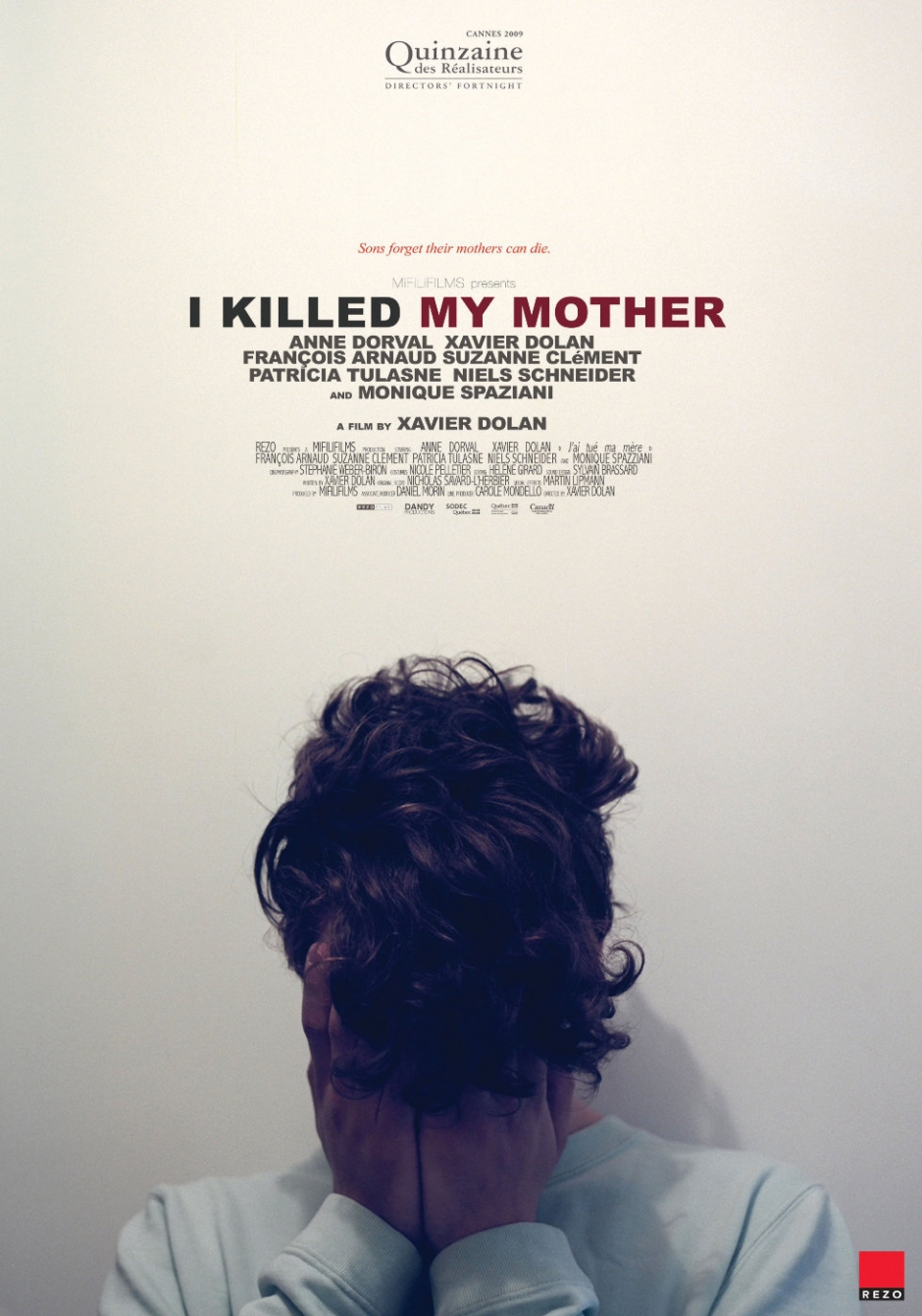
#3 I Killed My Mother (Xavier Dolan) 103 pts | 5 votes
 "There are borrowings from Truffaut, Wong Kar-wai, and lots of others that herald a giddy love of movies. Dolan is good at playing himself (not everybody is), and the camera likes him. If he continues to make movies—and with the encouragement he's gotten, which includes several awards at Cannes, he's unlikely not to—Xavier Dolan may turn into a good filmmaker."
#2 About Elly (Asghar Farhadi) 113 pts | 8 votes
 "Just because All about Elly appears to be simple at first, it is actually really deep; once I suspected that every frame in this film means something and is not just there, I entered an alternate visual language, which then communicated the urgency of what Elly's disappearance meant to me. I felt that this film thereby manages to tell me emotionally what I could rationally never fully comprehend: what it means to actually live in a country like that. No other film from Iran has ever done that for me, and I've rarely seen a film from another culture that managed to do so. So I would assume that Farhadi has taken directing to another level here."
#1 Face (Tsai Ming-liang) 146 pts | 13 votes
 "I loved some sequences, including the cigarette lighter illumination; a couple fun song numbers that are obviously lip-synched to; and a final erotic scene, (maybe?), with three women gyrating and disrobing in front of a man lying in a bathtub, covered with tomato paste, inside a meat locker. One can't forget it as the women look anything but sexy while in that location and the sound of meat hooks and chains clanging makes the whole thing rather jarring. And how can you not be oddly intrigued by the strand of saliva connecting the bathtub man's lips with the main woman's after a kiss, stretching further and further out until finally dissolving? Yet even those moments couldn't detract from the others that only found themselves leaving me shaking my head"
THE VOTERS: Mike D'Angelo, Alex Fung, Sky Hirschkron, Don Marks, Jeff McCloud, Victor J. Morton, Jason Overbeck, Theo Panayides, Matt Prigge, Peter Reiher, Vadim Rizov, Dan Sallitt, Michael Sicinski, Chris Stults, Froilan Vispo, C. Mason Wells, and Blake Williams. Thanks to all.
Here, then, are the group's estimation of the best films that premiered during 2009 but failed to secure New York distribution (and hence eligibility for the Skandies proper, which has a two-year window) by the end of 2011. I used to unveil these simultaneously with the main top 20, but it occurred to me a few years back that they really ought to have their own separate platform, given their undeserved semi-obscurity. Check back for the best films, performances, etc. of '11 around the beginning of February, after everyone's had a chance to see whether purchasing a zoo will solve all of Matt Damon's problems.
As ever, disclaimers abound. While roughly 40 professional and amateur cinéastes vote in the main survey, a smaller subset takes part in what's become known as the Undies—basically the folks who make it out to multiple festivals. (You can find their names way at the bottom.) And of course circumstances dictate that the results will skew in favor of those undistributed films that have been most widely seen, with a particular advantage going to anything that played at Toronto. No doubt many other excellent films were simply not seen by enough people to make the cut; feel free to mention overlooked favorites in the comments.
Alas, I'm too harried at the moment to write up commentary on 20 films, many of which I haven't seen. So I've let various folks who've posted their thoughts on the IMDb provide a characteristic remark (except where noted—you guys admire an awful lot of movies so obscure that they have not a single damn comment).
In reverse chrono:
#20 Accident (Soi Cheang) 22 pts | 3 votes

"So all in all, the potential is there and I must say that I personally enjoyed watching the movie, just because it was so silly and unapologetic in its stupidity (the eclipse at the end, and that road sign...), so in a way this movie would rate 1 star based on script and 10 based on premise, hence the rating of 5."
#19 Ruhr (James Benning) 23 pts | 2 votes

#18 Bena (Niv Klainer) 24 pts | 1 vote

#17 Fish Story (Yoshihiro Nakamura) 27 pts | 2 votes

#16 Eighteen (Jang Kun-jae) 27 pts | 3 votes

#15 Kinatay (Brillante Ma. Mendoza, DGPI) 27 pts | 4 votes

#14 Oxhide II (Liu Jiayin) 34 pts | 3 votes

#13 Air Doll (Hirokazu Kore-eda) 40 pts | 4 votes

#12 Alexander the Last (Joe Swanberg) 45 pts | 5 votes

#11 In Comparison (Harun Farocki) 50 pts | 5 votes

#10 Final Flesh (Vernon Chatman) 54 pts | 3 votes

#9 Symbol (Hitoshi Matsumoto) 55 pts | 7 votes

#8 Let Each One Go Where He May (Ben Russell) 57 pts | 4 votes

#7 The King of Escape (Alain Guiraudie) 63 pts | 4 votes

#6 It Felt Like a Kiss (Adam Curtis) 70 pts | 5 votes

#5 Disorder (Huang Weikai) 76 pts | 5 votes

#4 Like You Know It All (Hong Sang-soo) 78 pts | 8 votes

#3 I Killed My Mother (Xavier Dolan) 103 pts | 5 votes
#2 About Elly (Asghar Farhadi) 113 pts | 8 votes

#1 Face (Tsai Ming-liang) 146 pts | 13 votes

THE VOTERS: Mike D'Angelo, Alex Fung, Sky Hirschkron, Don Marks, Jeff McCloud, Victor J. Morton, Jason Overbeck, Theo Panayides, Matt Prigge, Peter Reiher, Vadim Rizov, Dan Sallitt, Michael Sicinski, Chris Stults, Froilan Vispo, C. Mason Wells, and Blake Williams. Thanks to all.
PREVIOUS WINNERS:
2000: Battle Royale (Kinji Fukasaku)
2001: Pulse (Kiyoshi Kurosawa)*
2002: Turning Gate (Hong Sang-soo)
2003: Not on the Lips (Alain Resnais)
2004: The 10th District Court—Moments of Trial (Raymond Depardon)
2005: Tale of Cinema (Hong Sang-soo)
2006: Taxidermia (György Pálfi)*
2007: Secret Sunshine (Lee Chang-dong)*
2008: Just Anybody (Jacques Doillon)
* (released commercially after the window of eligibility had closed)
Subscribe to:
Posts (Atom)